Is Sam Altman Attila the Hun reborn?
Oct 17, 2026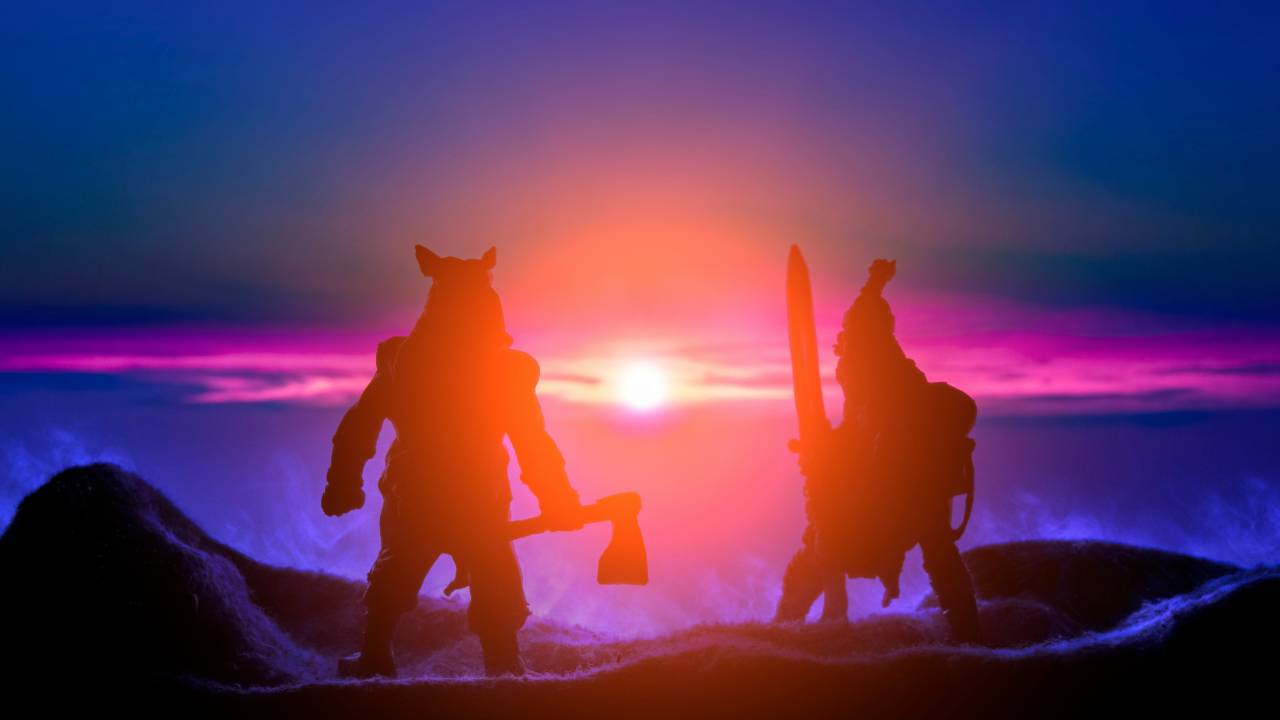
An interesting few days in Bologna and Ravenna. There is nothing quite like being surrounded by fifteen centuries of other people’s upheavals to put your own into perspective.
Bologna’s university dates its origins to 1088 and is generally recognised as the oldest university in the Western world. Still teaching. Still attracting students. Still asking questions to which there are no entirely satisfactory answers. Quite a respectable operating record.
Then there are the porticoes, with medieval origins, still doing the useful job of sheltering people as they walk around the city. San Petronio, begun in 1390, remains a working church with an unfinished façade. Anyone struggling to get a building project completed might find that reassuring.
And, for a less monumental example, spectacles emerged in northern Italy in the thirteenth century. An invention that allowed ageing eyes to carry on reading and working. I feel particularly well disposed towards that contribution to human progress.
These things have survived because successive generations have found them useful enough to maintain, repair and adapt. Their survival involved considerable work. History has not been quietly looking after them while everyone else got on with lunch.
Ravenna provides a rather sharper reminder of that. Its extraordinary monuments belong to a city that served, in succession, as a capital of the Western Roman Empire, the Ostrogothic kingdom and Byzantine rule in Italy. Its fifth and sixth century buildings preserve the splendour of a period we might otherwise imagine mainly in terms of collapse.
Looking back, we divide this history into manageable compartments. Romans. Barbarians. Middle Ages. Renaissance. Each gets a chapter, some dates and perhaps a useful map. Living through it must have been a lot less tidy. Imagine trying to run a business while working out whose authority now counted, whether your trading routes were safe and which of yesterday’s assumptions still applied. I suspect there were quite a few conversations along the lines of, “We will make a decision once things have settled down.” Some people may have waited a very long time.
The past was probably less leisurely than we think
We have a habit of imagining that everyone before us lived in a slower, more comprehensible world. For many people, much of the time, change was indeed slower. A medieval village did not receive a software update every fortnight. We should not pretend that every historical upheaval travelled at the speed of AI. But people experienced change relative to what they knew.
An invasion could destroy the arrangements on which a lifetime depended. A new trading route could enrich one town and bypass another, and as an added extra the invaders would probably pillage and then set fire to your town. Printing in Renaissance Europe changed the production and circulation of knowledge, with consequences far beyond the workshop in which the press stood.
Imagine being a skilled manuscript copyist (and there were thousands) and discovering that someone had found a way to produce books without requiring your particular skill for every copy. Being told that this was wonderful news for humanity might not have improved your afternoon. The benefits could be enormous. The disruption was, as always, very personal. That distinction seems rather relevant today.
Are the barbarians coming through the browser?
Which brings me to a question that occurred to me somewhere between the mosaics and the next meal. Is AI our barbarian invasion? Is Sam Altman a reincarnation of Attila the Hun?
The comparison is admittedly unfair for a number of reasons – I will leave you to figure out what they might be. But beneath the joke is a familiar fear. Something powerful has arrived from outside the world we understand. It does not respect the boundaries we assumed would protect us. Skills, status and institutions that looked secure suddenly appear vulnerable.
Calling it barbaric is one way of expressing that fear. It is also a way of avoiding a more awkward examination of our own arrangements. Were they serving us well, or had we simply become accustomed to them? The historical barbarians were people with societies, cultures and ambitions of their own, not a single destructive force. (“Barbarian” meant “someone who does not speak Greek”). AI is a technology developed and deployed by people making commercial and political choices. Neither becomes easier to understand through a label. And a company cannot decide what to do about AI by choosing between “civilisation” and “invasion”. It needs to understand what is changing.
What are we actually trying to preserve?
For a leader, this is where the interesting work begins. Take a professional services business whose clients pay for expertise. AI may reduce the time needed to produce research or a first draft. The firm then has to decide what its clients value enough to pay for. Is it the document? The judgement behind it? The confidence that someone competent will challenge a dangerous assumption and take responsibility for the advice? Defending every hour of the existing process could obscure the answer.
Or consider a manufacturer introducing AI into production planning. A system may improve the schedule, but experienced people still need to recognise when its recommendation depends on something that cannot happen on the factory floor. The leadership task is to work out how that knowledge enters the decision, who can challenge the system and who is accountable for the result. These are choices about the organisation. Buying the technology does not settle them.
Bologna’s university offers a useful provocation here. It has endured through centuries of changes in knowledge, government and technology. We cannot attribute that longevity to one simple formula. But it would be difficult to imagine it surviving by insisting that everything important had already been settled in 1088.
Nor does its survival mean that every institution around it survived equally well. A walk through beautiful historic cities introduces us to an unusually successful selection of the past. The businesses that disappeared have left fewer attractive places to stop for coffee.
There is no historical guarantee that we will manage this transition competently, but here is, however, plenty of reason to question the idea that upheaval has only just been invented. I came away from Bologna and Ravenna thinking about how much human effort goes into deciding what to carry forward. Knowledge, craftsmanship, institutions, habits. Some deserve investment. Some need substantial alteration. Some have probably been living on their reputation for rather too long. That is a demanding judgement for any leader to make, so perhaps, before we spend too much time wondering whether Attila has arrived, we should examine what we are defending, and why.
