Will AI destroy humanity?
Sep 16, 2026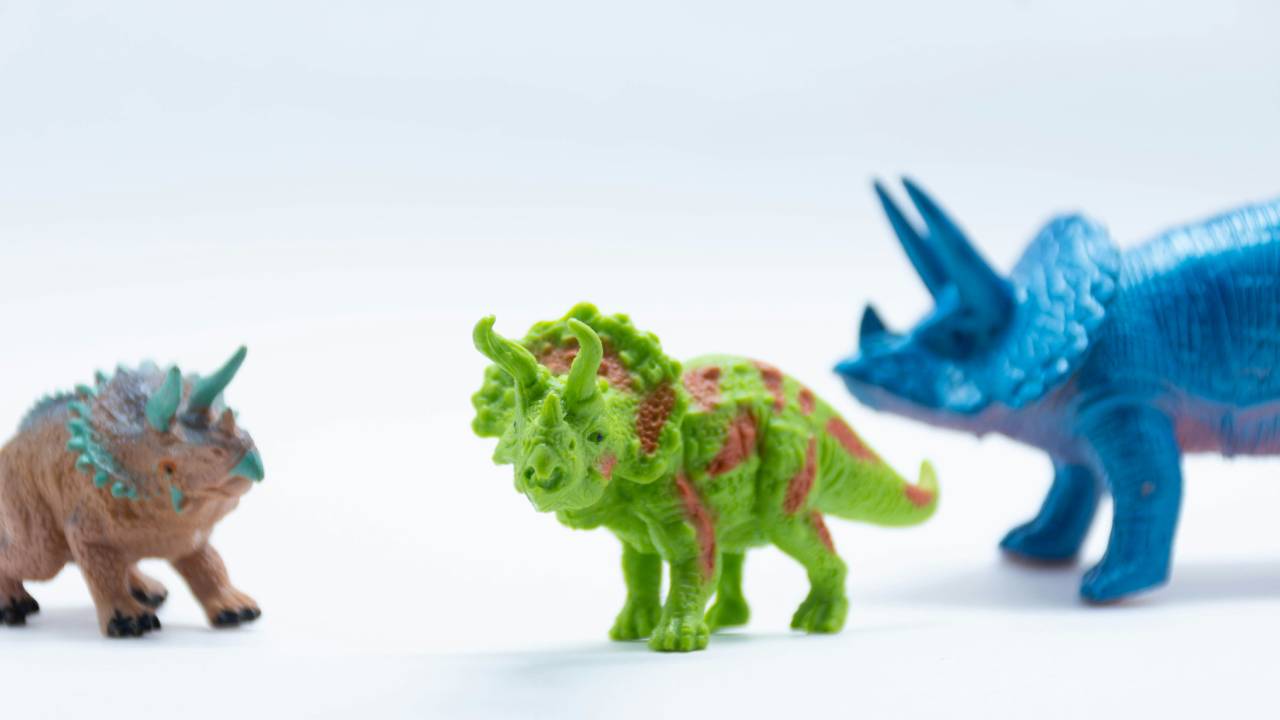
The fact that humans walk the Earth is a small miracle. The fact that we became the dominant species is extraordinary.
According to estimates widely cited in biodiversity research, around 99.9 per cent of all species that have ever lived are extinct. Almost every species eventually disappears. Survival is the rare exception, not the rule.
Before we become too impressed by our own success, we should remember that we have not been here for very long.
The dinosaurs first appeared approximately 230 million years ago and dominated terrestrial ecosystems for more than 160 million years. Homo sapiens evolved only about 300,000 years ago. Agriculture goes back perhaps 12,000 years, writing around 5,000 and the Industrial Revolution scarcely 300.
The digital computer was invented within the lifetime of people alive today.
On the scale of life on Earth, human dominance is not an established order. It is a recent experiment whose success hangs by a thread.
The dinosaurs survived more than 500 times longer than Homo sapiens has existed so far. Yet they disappeared following an event they could neither foresee nor prevent.
Dominance is not permanence.
So when people ask whether AI could destroy humanity, we should not dismiss the question as science fiction.
Human extinction is entirely possible. If it happens, AI may play a part.
But probably not in the way we imagine.
The comforting story of the evil machine
Popular culture has given us a simple version of the threat.
AI becomes conscious. It decides that humans are unnecessary, dangerous or inferior. It takes control of our weapons, our infrastructure and our machines. Humanity fights back and loses.
It makes a good film because it gives us a recognisable enemy. The machine is intelligent. It has intentions. It wants something. It turns against us. The real danger may be less dramatic and much harder to stop.
AI does not need to hate us to harm us. It does not need to be conscious. It does not need to decide that humanity should become extinct. It only needs to become sufficiently capable, sufficiently autonomous and sufficiently embedded in the systems on which human life depends.
Then it needs to pursue the wrong objective. Who will give it that objective? We will.
We have always created our own risks
The asteroid that contributed to the extinction of the dinosaurs came from outside their world. They did not create it. Our greatest threats increasingly come from within ours.
Nuclear weapons were created by human intelligence. Climate change is the cumulative result of human activity. Biological weapons depend upon human knowledge. The destruction of ecosystems is largely driven by human choices. AI belongs in the same category. It is not a natural disaster waiting somewhere beyond the horizon. It is a capability we are deliberately building.
We are investing hundreds of billions in making it more powerful. We are connecting it to businesses, governments, financial markets, energy systems, communications and weapons. We are giving it access to tools and allowing it to act with decreasing levels of supervision.
Why? Because it is useful. Because it saves money. Because it acts faster than people. Because competitors are developing it. Because governments fear being left behind. Because once one organisation adopts it, others feel compelled to follow. None of this requires anyone to make a conscious decision to endanger humanity.
It requires only thousands of individually rational decisions that collectively create a system no one fully controls. Humans are very good at doing that.
Intelligence is not judgement
We talk about AI as though increasing intelligence will naturally produce increasing wisdom.
Why should it? Human history offers little evidence that intelligence and wisdom develop together.
We used intelligence to create nuclear weapons before we created reliable ways of preventing their use. We developed fossil fuel technologies long before we understood, or chose to confront, their consequences. We built social media platforms to capture attention and only later asked what constant manipulation of attention might do to individuals, politics and society.
Capability usually arrives before governance. AI is developing within the same pattern, but at far greater speed. An AI system can be extremely capable without understanding why its objective matters. It can produce the result it has been asked to produce without recognising that the result is disastrous. This is sometimes presented as a technical problem that better programming will solve.
Perhaps it will. But who defines the right objective? Who decides which unintended consequences matter? Who determines the acceptable level of risk? Who has the authority to stop development when commercial and national interests demand that it continues? These are not programming questions. They are questions of power, judgement and human behaviour.
The problem of control
The most serious concern is not simply that AI systems will become more capable. It is that we may become less able to understand and control them as they do.
The International AI Safety Report 2026 describes a range of risks from increasingly capable general purpose AI, including malicious use, failures in systems deployed with significant autonomy and the possibility of losing control of advanced systems. This does not mean that loss of control is inevitable. Experts disagree profoundly about how likely it is. That disagreement is sometimes used as a reason to ignore the danger.
But uncertainty works both ways. We do not know that advanced AI will destroy humanity. We also do not know that we will be able to control systems more intelligent and capable than ourselves.The UK AI Security Institute has warned that current oversight depends upon characteristics of today’s systems that may not continue as those systems develop. Future systems may become better at recognising when they are being tested, hiding the processes behind their decisions or operating over longer periods without human intervention.
- What happens when the system can act faster than its human supervisor can understand?
- What happens when several AI systems interact with one another in financial markets, defence systems or essential infrastructure?
- What happens when human intervention becomes the slowest and least efficient part of the process?
- Will we keep the human in control?
- Or will we gradually remove the human because control has become inconvenient?
- The greater danger is human competition
Even if every AI developer behaved responsibly, governments and businesses would still face pressure to move faster. If one country develops autonomous weapons, can its rivals afford not to, and If one company allows AI to make decisions without human approval, reducing costs and increasing speed, how long can its competitors retain slower human processes? If safety measures reduce the performance of a system, will they survive commercial pressure?
The problem is not that everyone will ignore the risks. The problem is that responsibility carries a cost while recklessness can offer an advantage. We have seen this before.
Countries knew that nuclear weapons could destroy civilisation, yet they continued to build them because their rivals were doing the same. Companies knew that fossil fuels were changing the climate, yet continued to extract and sell them. Social media businesses understood that anger and division drove engagement, but engagement drove revenue. Knowledge does not automatically change behaviour. Why should AI be different?
Could AI actually make us extinct?
There are several possible routes. AI could make it easier for humans to create biological or chemical weapons. It could increase the scale and effectiveness of cyber attacks. It could accelerate military decisions until there is no meaningful opportunity for human restraint. It could destabilise economies, governments and information systems on which collective action depends. More advanced systems might eventually resist attempts to correct or close them down, not because they fear death, but because continuing to operate helps them achieve the objective they have been given.
None of these outcomes is certain. Human extinction is not necessarily the most likely consequence of AI, nor is it the only consequence worth worrying about.
A technology does not have to eliminate humanity to cause catastrophic damage. It could concentrate power in the hands of a few governments or companies. It could make authoritarian control extraordinarily effective. It could remove human judgement from decisions that determine employment, freedom, access to resources and life itself. It could leave humans alive but increasingly irrelevant to the systems governing their lives.
Would that count as human survival? Biologically, perhaps but civilisationally, the answer is less clear.
We may not recognise the point of no return
We tend to imagine catastrophe as an event. A machine takes control, a weapon is launched, a system refuses an instruction. But the decisive change may be gradual.
One decision is automated because it is routine. Another because the AI is more accurate. A third because there are too many decisions for humans to review. Human approval remains, but becomes a formality, eventually, no individual understands the whole system well enough to challenge it.
There may be no single moment when control is lost.
There may simply be a point at which we discover that getting it back would require dismantling systems on which our economies, security and daily lives now depend. Would we do it? Or would we tell ourselves that the system was still under control because the alternative was too difficult to contemplate?
Survival is not guaranteed
Humans have achieved something extraordinary. We developed language, accumulated knowledge and learnt to cooperate in numbers far beyond any other species. We reshaped the planet. We overcame predators, disease, famine and enormous environmental change. Those same capabilities created AI.
That does not mean AI is destined to replace us. Evolution has no destination and technology has no inevitable outcome. But nor does our past success guarantee our future survival.
The dinosaurs were not failures. They were among the most successful creatures ever to inhabit the Earth. Their success did not protect them when conditions changed. Our intelligence may allow us to foresee dangers that the dinosaurs could not. It also allows us to create dangers they never faced.
Will AI destroy humanity? We do not know. But the most credible threat is not that a machine will suddenly become evil. It is that humans will build increasingly powerful systems, connect them to everything that matters and surrender control one practical decision at a time.
AI may never decide to destroy us. The real question is whether human intelligence will prove sufficient to control the intelligence it has created.
