Welcome to October’s Defy Digest.
This month, we are looking at what it takes to lead when certainty is in short supply.
How can organisations prepare for a future they cannot predict? Which assumptions could leave a business exposed? And how can leaders combine human judgement with emerging technology while building the resilience to perform under sustained pressure?
We are also celebrating Christopher Farnath’s feature in CIO Mogul and sharing Helen’s latest podcast conversation with Daria Rudnik, exploring resilience strategy and the growing role of hybrid intelligence.

Stop Trying to Predict the Future
The future has always been uncertain. What has changed is the speed at which new technology, shifting markets and global events can overturn the assumptions behind a strategy.
Leaders do not need a perfect forecast. They need the curiosity to explore different possibilities, the discipline to question what they think they know and the flexibility to respond when circumstances change.
This article considers how leaders can think more clearly about what may lie ahead, without mistaking prediction for preparation.
Coffee Break Listen
What happens when human experience, judgement and creativity work alongside artificial intelligence?
In the latest episode of So you want to be a leader… Really?, Helen speaks with Daria Rudnik about resilience strategy and hybrid intelligence. Drawing on Daria’s experience across crises, organisational transformations and team dysfunction, they explore how leadership is evolving as people and technology learn to work together.
It is a timely conversation about navigating complexity, strengthening teams and retaining the human judgement that effective leadership requires.
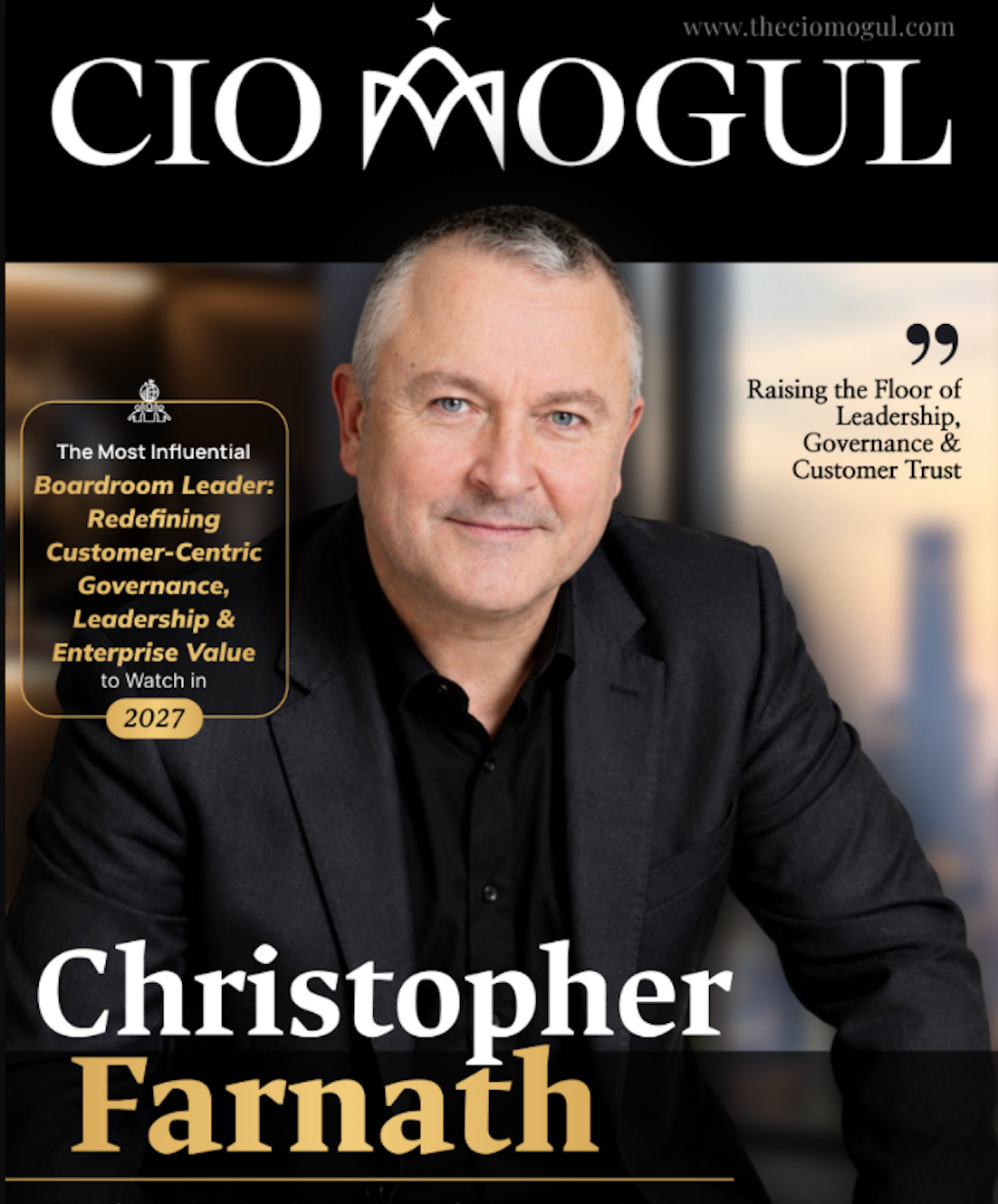
We are delighted to see Defy Expectations team member Christopher Farnath featured by CIO Mogul as a boardroom leader redefining customer-centred governance, leadership and enterprise value.
The feature explores Christopher’s perspective on board leadership, strategic oversight, risk, customer experience and sustainable organisational outcomes. Central to his approach is the principle of “raising the floor”: strengthening leadership foundations, reducing repeatable failures and making reliable execution the norm.
Congratulations, Chris, on this well-deserved recognition.

What Could Put You Out of Business?
It is an uncomfortable question, which is precisely why leadership teams need to ask it.
The greatest threat to an organisation may be a new competitor, a changing market or an emerging technology. It may also be an internal assumption that has gone unchallenged for too long.
Exploring what could bring the business down creates an opportunity to identify vulnerabilities, test the strategy and take action while there is still time to choose the response.

...and yet we so often treat is as just that. Over and over I hear leaders tell their people to "be more resilient" and that doesn't work. It leads to nothing - no improvement, no increase in engagement or productivity.
You can teach resilience, you can teach the physiology and psychology that build true and lasting resilience. And in just six weeks you can see:
22% improvement in overall resilience,
42% improvement in persistence after failure,
17% improvement in confidence when overcoming obstacles
10% improvement in overall leadership behaviours.
All of this in just a commitment of 5 minutes a day.
Resilience is not simply wellbeing, or something you either naturally have or don’t have, but it is a leadership capability that can be developed through small, consistent practices
Enjoyed reading this?
Sign up to get it delivered to you monthly